Material Deep Dive

Quartz Countertops in New Hampshire

Engineered consistency for households that don't want to think about their countertop. Everything you need to know before choosing quartz for your kitchen, bath, or vanity project.

Mohs Hardness
~7 (engineered)
Scratch resistance rating
Heat Resistance
Good — avoid direct high heat
Porosity / Sealing
Non-porous — never needs sealing
Best For
Busy households & consistent color
What It Is

Where quartz comes from.

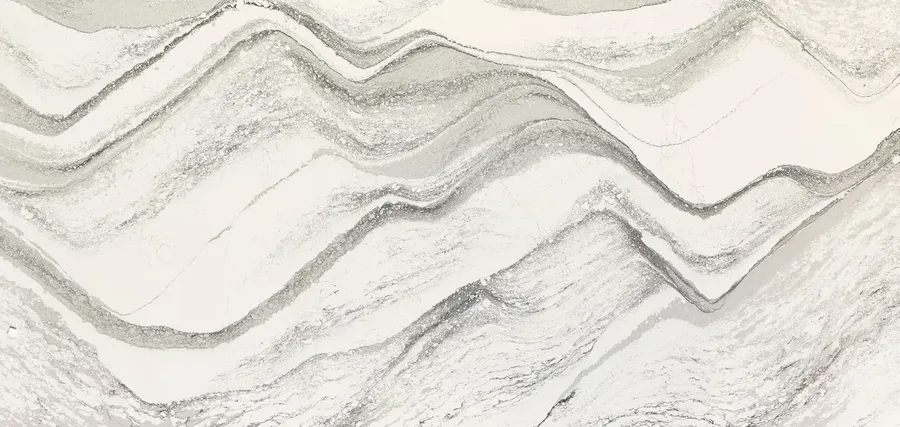
Unlike granite or marble, quartz countertops aren't cut from a quarry — they're engineered. A typical slab is roughly 90–95% crushed natural quartz bound together with 5–10% polymer resin and pigment, then compressed under heat and pressure into a dense, non-porous surface. The quartz mineral itself is genuinely hard and heat-stable; the resin is what gives the slab its uniform color and pattern, and it's also the material's one real limitation.
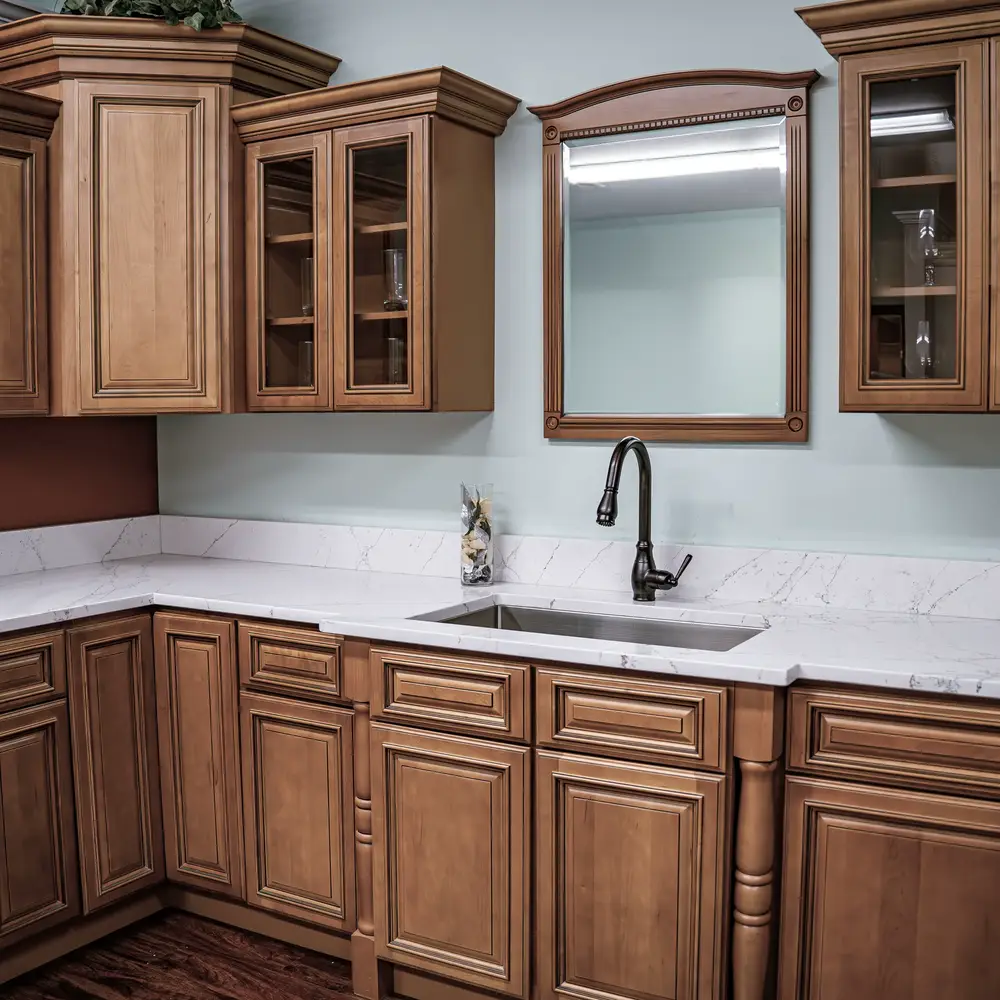
Quartz countertop
Durability

How it holds up.

Engineered quartz lands around 7 on the Mohs scale, competitive with granite for scratch resistance, and because it's non-porous, it never needs sealing and resists staining from wine, oil, and acidic foods far better than any natural stone. The tradeoff is heat: the resin binder starts to soften and can scorch or discolor with sustained contact above roughly 300°F, so trivets matter more with quartz than with granite or quartzite.

Care & maintenance: This is quartz's strongest selling point — daily care is just a damp cloth and mild soap. No sealing, ever. The only real rule is heat management: always use a trivet under anything straight from the oven or stovetop, and let hot cookware cool slightly before it touches the surface.
Weighing It Up

Pros & cons.

What we love

  • Non-porous — never needs sealing, ever
  • Extremely consistent color and pattern across the whole slab
  • Highly stain-resistant against wine, oil, and acidic spills
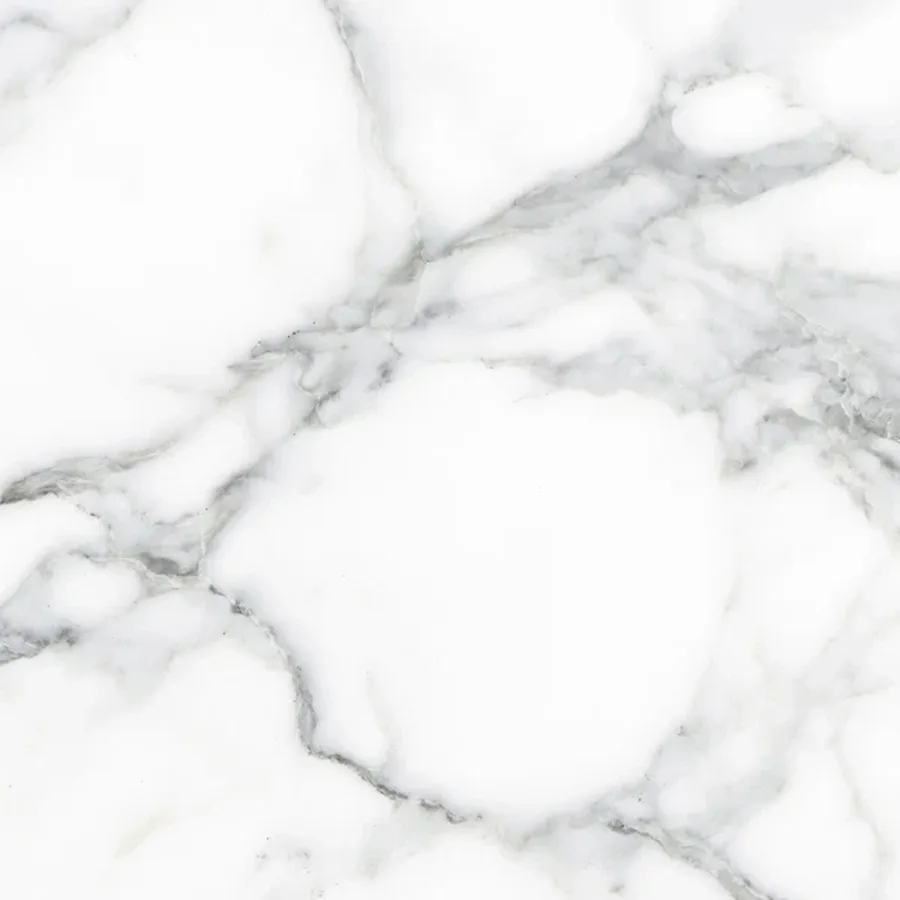
  • Wide range of colors, including looks that mimic marble

Worth knowing

  • Resin binder is vulnerable to sustained heat above ~300°F
  • Can look slightly less 'natural' than real stone up close
  • Direct sun exposure over years can fade some colors — not ideal for uncovered outdoor kitchens
  • Seams can be more visible than on some natural stones
Common Questions

Quartz FAQ.

Is quartz really heat resistant?
The quartz mineral itself handles heat fine — it's the polymer resin holding the slab together that's the weak point, generally starting to react somewhere above 300°F of sustained contact. Short, incidental contact with a warm plate is not a concern; a pan straight off a burner is.
Do I ever need to seal quartz countertops?
No. Quartz is engineered to be non-porous, so sealing isn't part of its maintenance at all — that's one of its biggest advantages over granite or marble.
Can quartz go in an outdoor kitchen?
We generally recommend granite for uncovered outdoor applications. Quartz can discolor with prolonged direct UV exposure, so it's better suited to covered outdoor kitchens or indoor spaces.
Compare Materials

Other stone options.

Comparing quartz against Granite, Marble, Quartzite, Soapstone, Remnants? See the full side-by-side on our materials page, or explore each below.

See Full Materials Comparison →
Serving the Monadnock Region

Quartz countertops near you.

We fabricate and install quartz countertops and vanity tops throughout the Keene area.

Request a Quote

Get pricing for quartz countertops.

Tell us about your project and we'll respond within one business day with an honest, itemized estimate.
Quote requests are routed to sales@poshhaus.com. Your number will not be shared with third parties for marketing.

Reach Us Directly

Prefer to call or email?

  • Call: 844-438-7674 (toll-free) or 603-795-0100
  • Email: sales@poshhaus.com
  • Address: 104 Emerald St, Keene, NH 03431
  • Hours: Mon–Fri 9am–4pm, Sat by appointment
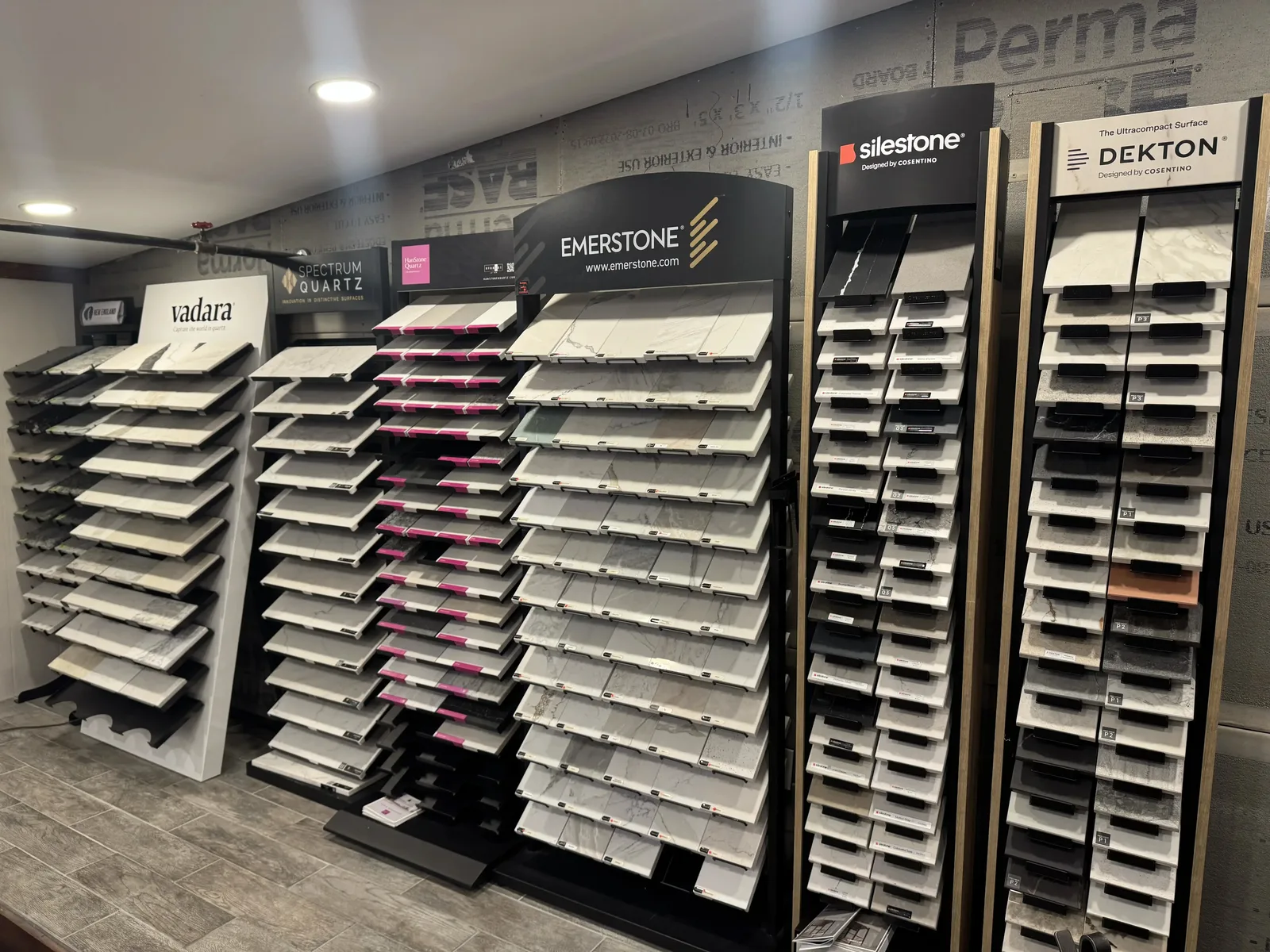
PoshHaus Stone showroom