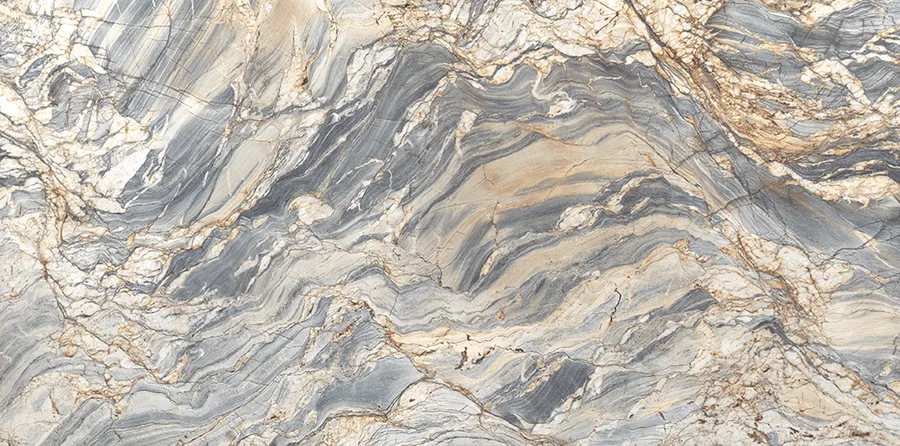
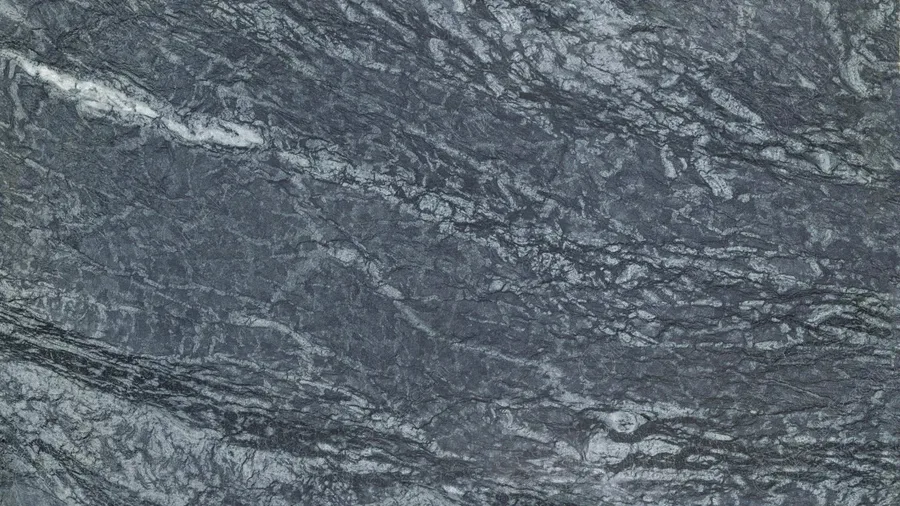
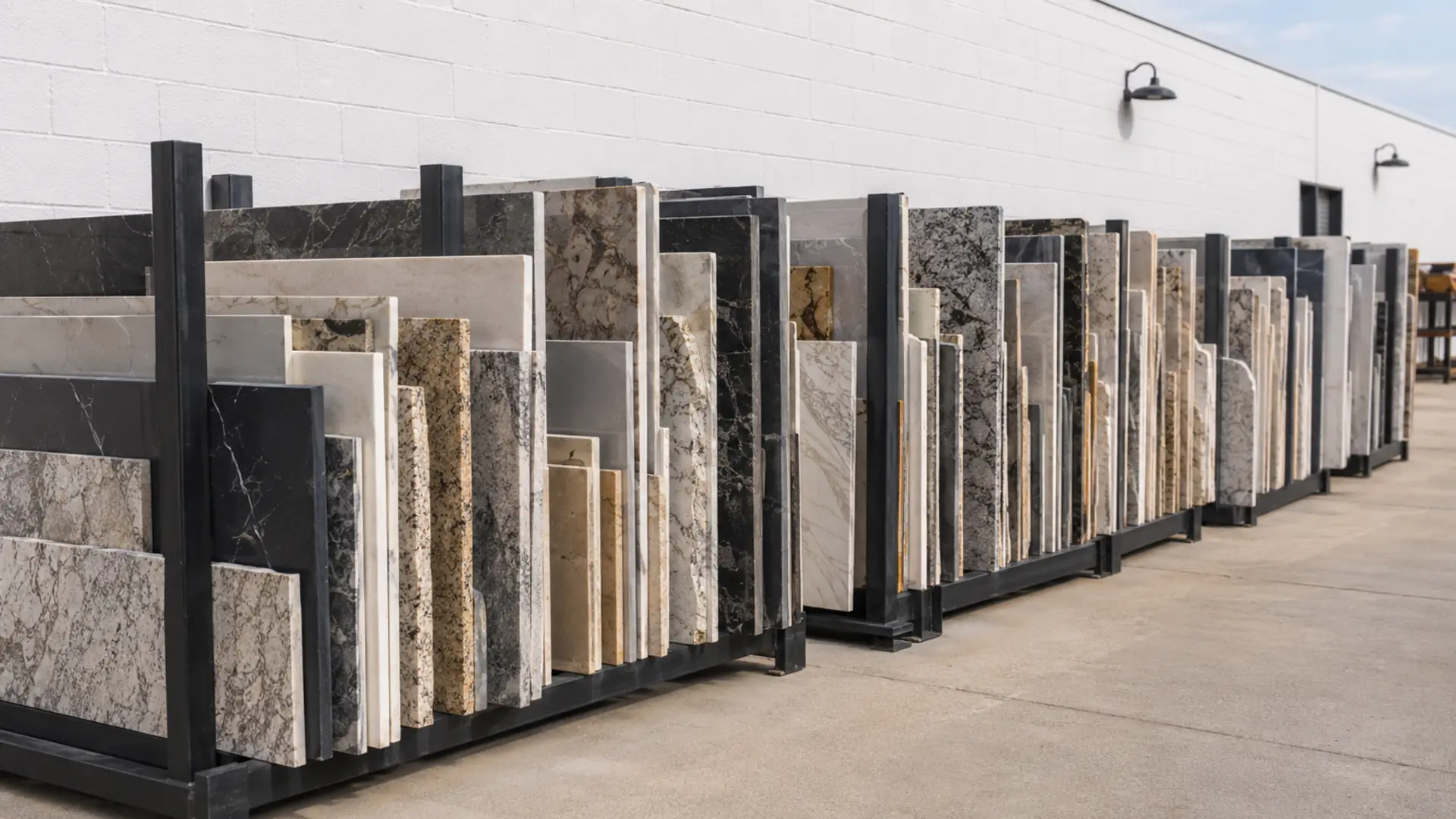
A living surface that gets better with age. Everything you need to know before choosing soapstone for your kitchen, bath, or vanity project.
Soapstone is a metamorphic rock built primarily around talc — the same mineral that gives it a soft, soapy feel when you run a hand across it (hence the name). Commercial countertop-grade soapstone is typically 30–50% talc, with the remainder made up of harder minerals like chlorite and magnesite; the lower the talc content, the harder the slab. True soapstone is technically called steatite, and its low thermal expansion is exactly why it's been used in wood stoves and fireplace surrounds for generations — it simply doesn't crack from repeated heating and cooling the way most stone does.
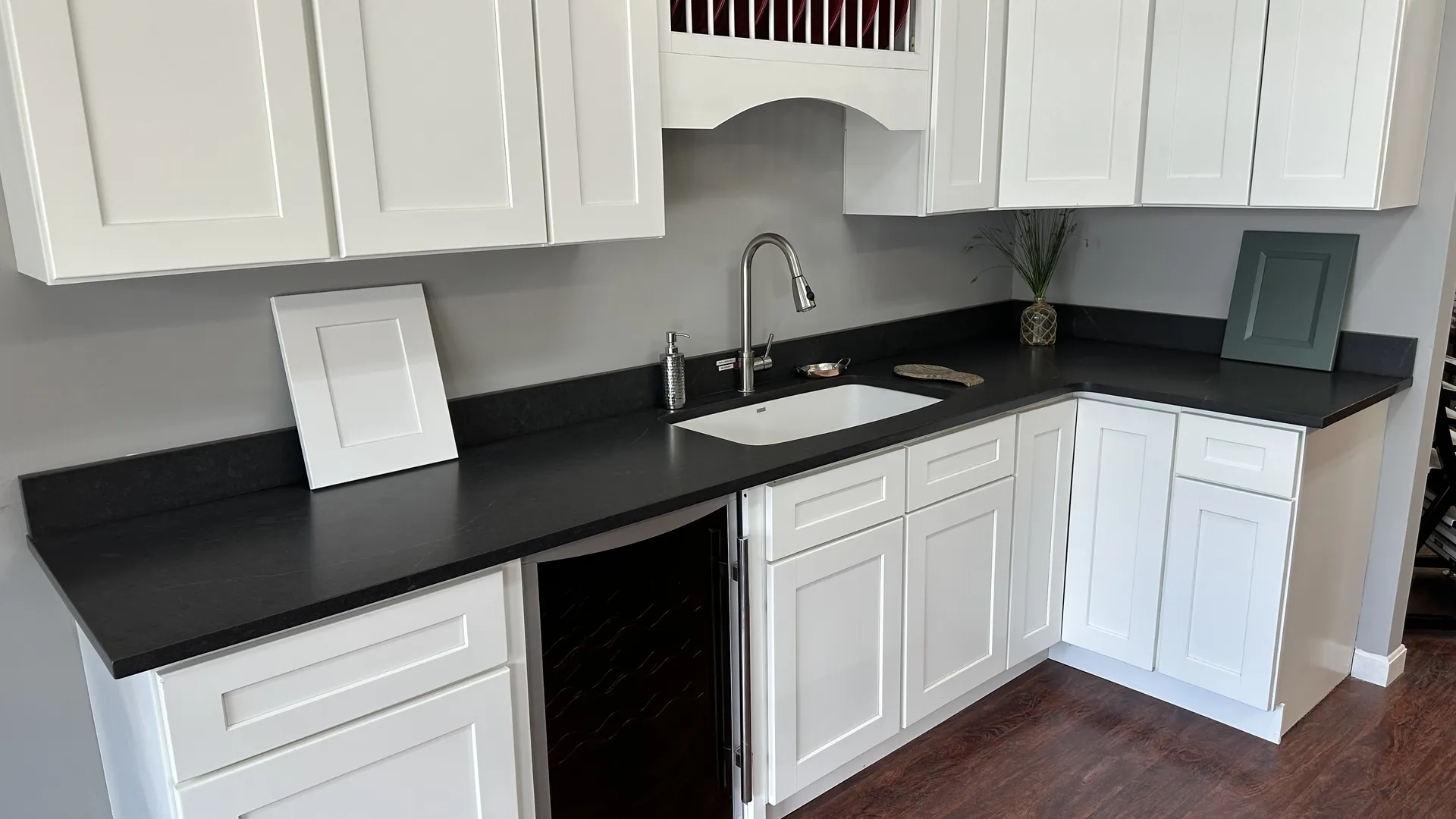
On the Mohs scale, soapstone typically runs 2.5 to 4, softer than granite or quartzite, and it will show scratches with everyday use. What makes it work as a countertop anyway is that soapstone is naturally non-porous — it doesn't stain, doesn't need sealing, and is inherently resistant to bacteria and acids. Scratches aren't really a flaw here; they blend into the surface over time as the stone develops a deepening patina, especially with periodic mineral oil or beeswax treatments.
Comparing soapstone against Granite, Quartz, Marble, Quartzite, Remnants, Solid Surface, Porcelain, Recycled Glass, Slate, Butcher Block? See the full side-by-side on our materials page, or explore each below.
We fabricate and install soapstone countertops and vanity tops throughout the Keene area.
Tell us about your project and we'll respond within one business day with an honest, itemized estimate.