Marble asks more of you than granite or quartz — here's exactly what that means day to day, and how to keep it looking its best for decades.
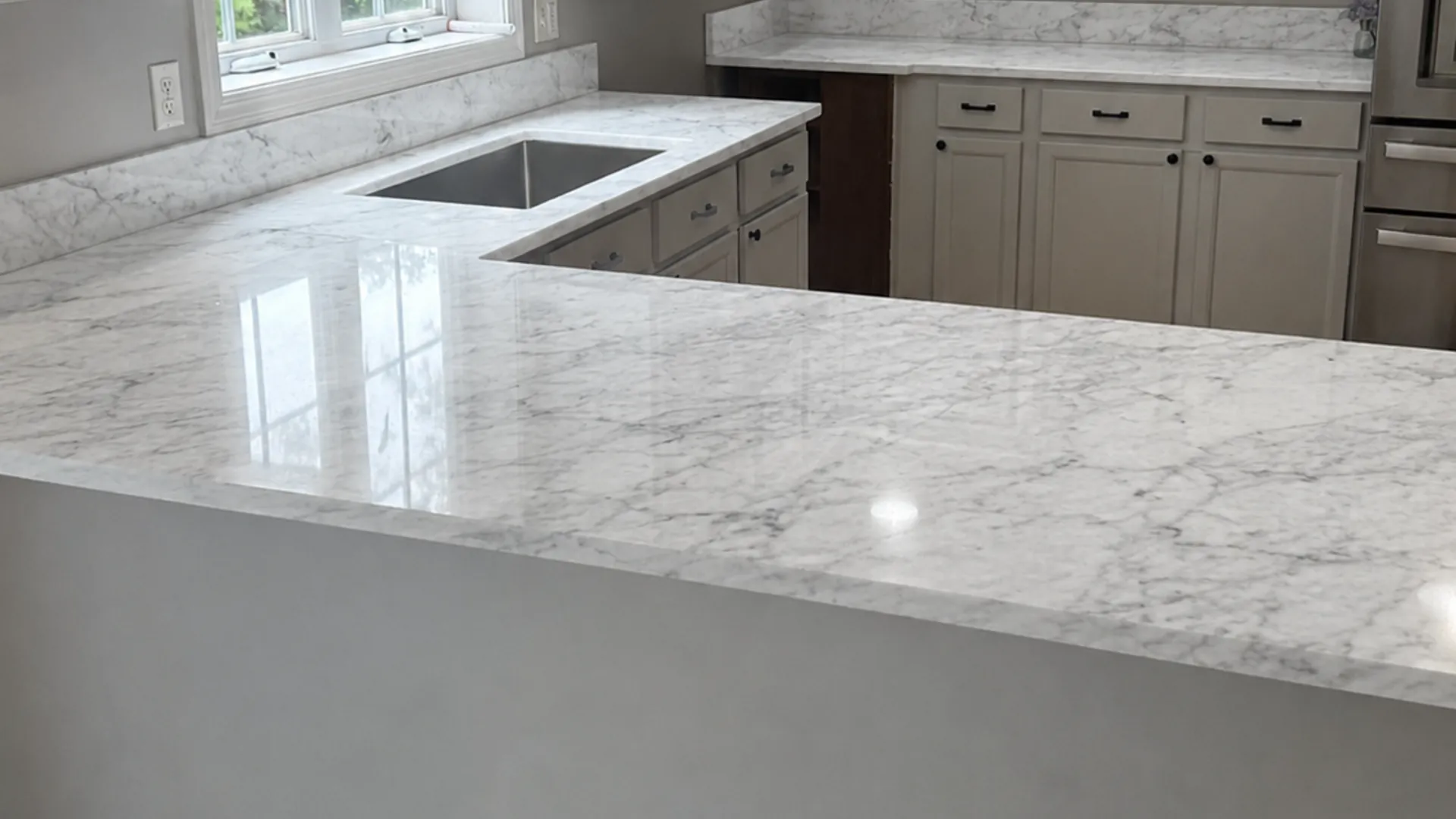
Marble has a reputation for being high-maintenance, and honestly, it's earned. But "high-maintenance" doesn't mean "impossible" — it means there are a handful of specific habits that make a real difference. Here's what actually matters.
Marble is made mostly of calcite, and calcite reacts chemically with acid. Lemon juice, wine, vinegar, tomato sauce — any of these left sitting on marble can leave a dull "etch" mark where the acid has literally reacted with the stone's surface. This is different from a stain, and it can't be wiped away once it's happened; it can only be polished or refinished out.
Knowing this changes how you use the surface. It's not that you can never chop a lemon near your marble island — it's that a splash left overnight is a real risk in a way it wouldn't be on granite or quartz.
If you're choosing marble for an active kitchen, ask for a honed (matte) finish rather than a high-polish finish. Honed marble hides both scratches and etch marks dramatically better than polished marble, which shows every mark with unforgiving clarity. Many homeowners who "don't like how their marble is aging" actually chose polished when honed would have suited their lifestyle much better.
Marble has been used in kitchens for centuries, and a lot of that history involves stone that shows some age. Some homeowners genuinely love the soft, lived-in look that develops over years — light etching and wear that reads as character rather than damage. If that appeals to you, marble becomes a much easier material to live with. If you want something that looks brand-new indefinitely with minimal thought, quartzite gives you a very similar aesthetic with dramatically less maintenance.