The edge profile is one of the most visible design decisions on your entire countertop — here's what each style actually looks and feels like.
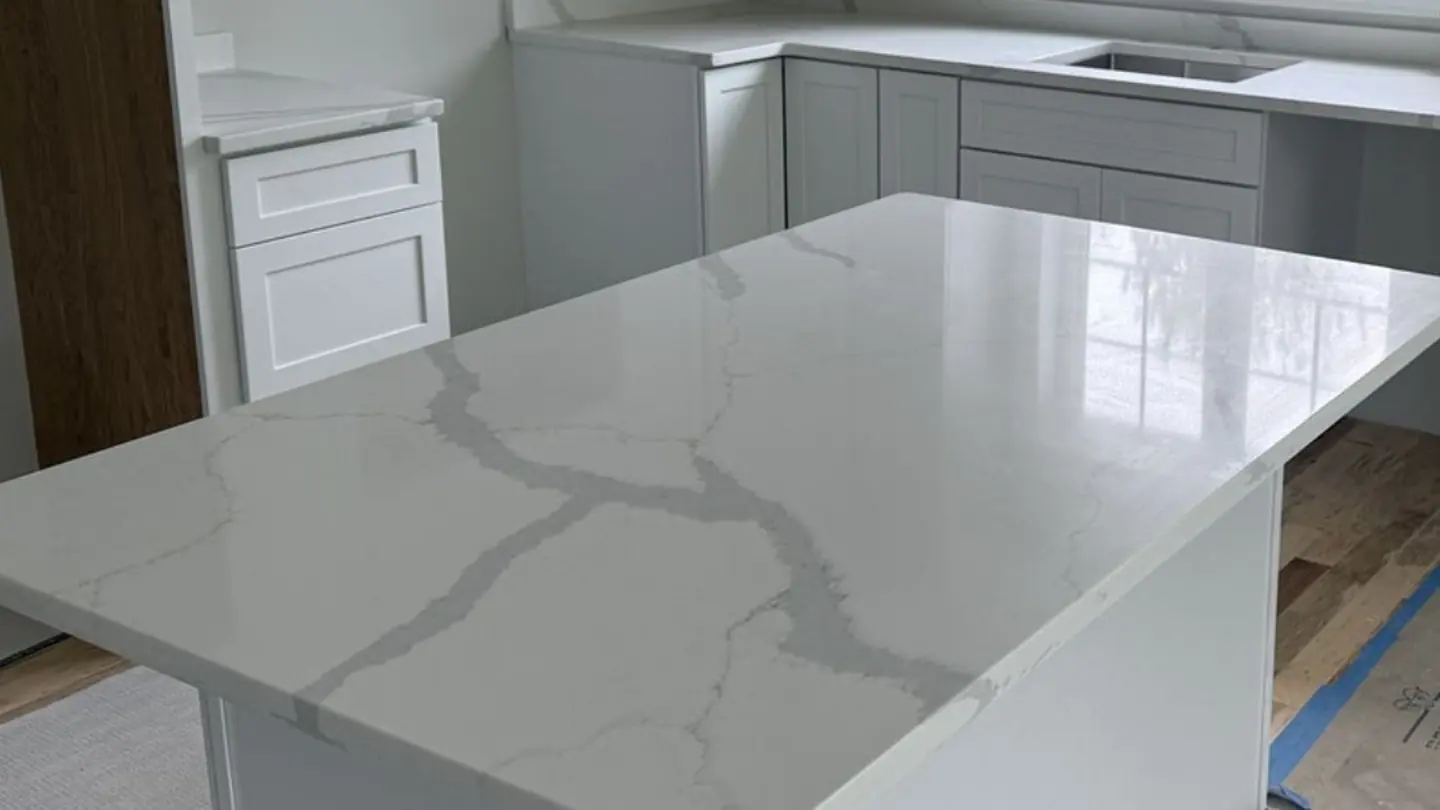
When homeowners picture a new countertop, they usually picture the material — the color, the veining, the finish. What they don't picture, until they're standing in a showroom, is the edge. But the edge profile is one of the most visible design decisions you'll make, and it changes the entire feel of a kitchen.
An eased edge is a clean 90° corner with just a slight softening so it's not razor-sharp. It's the most popular choice in contemporary kitchens because it's simple, unobtrusive, and lets the stone itself be the star. If you're not sure what you want, this is a safe, timeless default.
A beveled edge adds a subtle 45° angled cut along the top, which catches light differently and reads as slightly more finished than a plain eased edge without being ornate. Dupont edges take that a step further with a squared profile plus a rounded step, giving a more architectural, tailored look.
A full bullnose rounds the entire top edge into a smooth curve — soft, safe (genuinely useful with young kids around), and common in more traditional kitchens. A half bullnose rounds just the top portion while keeping the bottom flat, splitting the difference between soft and structured.
An ogee edge is an S-curve profile, historically associated with formal, traditional kitchen design. It's more labor-intensive to fabricate and shows off craftsmanship, but it can look busy in a more minimalist kitchen — it's a strong choice when your cabinetry and overall design lean traditional.
A waterfall edge wraps the countertop material 90° down the side of an island, so the stone appears to "fall" all the way to the floor with no visible seam at the corner. It's become one of the most requested details in modern kitchen islands, and it works especially well with materials that have dramatic veining, since the pattern continues unbroken around the corner.
Bring inspiration photos to your consultation. Edge profiles are genuinely hard to picture from a name alone, and seeing a physical sample in your hand changes the decision every time.